
Raging in the falling dark
I need distance from my Evangelical tribe.

I wish we’d all been ready
My sojourn on the planet began in Montreal among the Plymouth Brethren. We didn’t go to church. We were the church. No ornate sanctuary for us, just a modest “chapel.” No lectionary, just the Bible. No pastor, just a handful of elders. On Sundays, women covered their heads and kept quiet while men requested hymns (sung a cappella), read scripture and delivered homilies before we shared the Lord’s Supper—each of us tearing a piece from a single loaf and sipping port from a single chalice. We were a serious and separated bunch, as Garrison Keillor described the Sanctified Brethren of imaginary Lake Wobegon: “a lot of very quiet people worrying about each other’s souls.”1

The movement owes its origins to Irishman John Nelson Darby who, in the mid-19th century, defended low-church ecclesiology and popularized the curious idea of a pre-tribulation rapture in which God evacuates true Christians heavenward before pouring out judgment upon the earth. Darby championed Dispensationalism, which took America by storm when, in 1909, lawyer-turned-pastor C. I. Scofield transcribed Darby’s teachings into the footnotes of his Scofield Reference Bible. In due course, Dispensationalists would move from the hermeneutical bleachers onto the political playing field where they lobbied and labored for Jewish hegemony over the Holy Land and its peoples, in part because they knew the End was near.2
In high school the Jesus Movement found me underlining verses in my Bible, patching my jeans like Randy Stonehill, and playing Fender Rhodes and harmonica in a Christian folk band.
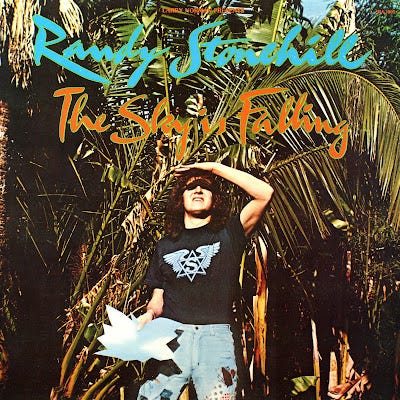
The post-Woodstock seventies were for me a time to gather weekly with friends—to play guitar, sing, pray and pledge our loyalty to Jesus. We were living on history’s edge, after all, what with Larry Norman’s sound track (“I wish we’d all been ready,” 1969), Hal Lindsey’s bestseller (The Late, Great Planet Earth, 1970), and apocalyptic shock flicks (A Thief in the Night, 1973)—all following hard on those six days of war in 1967 that that “miraculously” brought Jerusalem’s Temple Mount under Jewish control.

Fulfillment, not negation
It wasn’t until college that I read my way out of rapture theology and abandoned the apocalyptic dualism of my youth. No longer was I “only visiting this planet,” nor was worldwide destruction something to welcome. No longer did every earthly conflict embody a cosmic battle between heavenly Light and infernal Darkness.
As for Dispensationalism’s central tenet, that ethnic “Israel” and the Christian “church” were to remain forever distinct, however, I was agnostic. By the mid-eighties, enamored with lexical semantics, I was writing an M.A. thesis on terms for the people of God in the New Testament and discovering Paul’s habit of describing his mostly-Gentile churches with language long reserved for ethnic Israelites.3
Romans 9:24-25: including us whom he has called, not from the Jews only but also from the gentiles? As he also says in Hosea, “Those who were not my people I will call ‘my people,’ and her who was not beloved I will call ‘beloved.’” “And in the place where it was said to them, ‘You are not my people,’ there they shall be called children of the living God.”
Galatians 3:7, 9, 29: those who believe are the descendants of Abraham; those who believe are blessed with Abraham who believed; if you belong to Christ, then you are Abraham’s offspring, heirs according to the promise.
Galatians 4:28, 31: you, my friends, are children of the promise, like Isaac; We are children . . . of the free woman
Ephesians 2:12: you were at that time without Christ, being aliens from the commonwealth of Israel
Philippians 3:3: For it is we who are the circumcision, who worship in the Spirit of God and boast in Christ Jesus and have no confidence in the flesh.
To what extent did Christ-believing Gentiles share in the covenants and blessings promised ancient Israel? Did the New Testament preserve an ongoing distinction between Gentile and Judaean Christ believers? Was the national, territorial restoration foreseen by Israel’s prophets fulfilled in the church, or should we expect Jewish political resurgence?
My Israel/Church quandary persisted into the nineties when I found my way to Duke University to study with Richard Hays, who wrote of Paul’s gospel as “the fulfillment, not the negation, of God’s word to Israel,” and Paul’s Scriptures as “a prefiguration of the church as the people of God.”4

To suggest that Jesus’ movement annulled or replaced Israel would have been incoherent to Paul. On the contrary, Paul would have seen the church as a promise fulfilled, and Christ-believing gentiles as co-equal children of Abraham and co-heirs of the blessings promised the commonwealth of Israel (Gal 3:29; Eph 2:11–3:6; 1 Pet 2:9–10).
With believing Gentiles now fully belonging to Abraham’s family, with God now most present in Jesus, and with a global mission underway, New Testament authors had little to say about redrawn physical borders, and much to say about erased barriers between peoples. Nowhere is this more explicit than in Ephesians 2.
11 So then, remember that at one time you gentiles by birth, called “the uncircumcision” by those who are called “the circumcision”. . . 12 remember that you were at that time without Christ, being aliens from the commonwealth of Israel and strangers to the covenants of promise, having no hope and without God in the world. 13 But now in Christ Jesus you who once were far off have been brought near by the blood of Christ. 14 For he is our peace; in his flesh he has made both into one and has broken down the dividing wall. . . 15 . . . that he might create in himself one new humanity in place of the two, thus making peace. . . 17 So he came and proclaimed peace to you who were far off and peace to those who were near, 18 for through him both of us have access in one Spirit to the Father. 19 So then, you are no longer strangers and aliens, but you are fellow citizens with the saints and also members of the household of God, 20 built upon the foundation of the apostles and prophets, with Christ Jesus himself as the cornerstone; 21 in him the whole structure is joined together and grows into a holy temple in the Lord, 22 in whom you also are built together spiritually into a dwelling place for God.
Four waypoints on a journey
Not until the early 2000s, after joining the faculty of Westmont College, did I realize that my reading of Paul’s letters had political implications.
The teaching post came with a travel budget so I boarded a plane bound for Tel Aviv, hoping for stories and pictures from the Holy Land to spice up my lectures. But what seized my attention as the Second Intifada wound down was not just the vistas of Arbel, the crystalline Dead Sea, and the gates of Old Jerusalem. What held my gaze were the visible tensions between peoples and the trappings of a military occupation, among them sprawling checkpoints growing up around Jerusalem and the serpentine Wall that began to appear in 2002.
Switching Teams
Initially I assumed Israel’s harsh tactics were self-defense or understandable retaliation against Arab bus-bombers and Muslim militants. By 2006, however, the evidence before me suggested otherwise. Long pre-dawn queues of laborers at checkpoints; incremental dispossession of Palestinians from their land; inequitable distribution of resources; daily humiliations and unreasonable constraints—none of it was necessary or humane.
When I visited Hebron families trapped and barred from “sterilized” (i.e., Arab-free) streets; when I watched soldiers assault and gas unarmed villagers for refusing to relinquish confiscated farmland; when I helped rebuild houses (mixing mortar, moving bricks, pulling nails) flattened by Daewoo bulldozers for the lack of building permits (nigh impossible to acquire), Israeli talking points rang hollow.

Critics might say I had traded one false moral binary for another, replaced the Palestinian-Arab villain with the Israeli-Jewish one, switched teams but didn’t change the game. They wouldn’t be entirely wrong.
Moving between worlds
With time, as I moved easily between opposite worlds—settlement and refugee camp; Tel Aviv and Nablus; West Jerusalem and East, I learned to toggle also between conflicting mythologies: Jewish Zionist and Palestinian liberationist. Whether from Holocaust or Nakba, national trauma was real. The Land had room for two peoples, each with ancient ties, existential fears, legitimate grievances, and profound ignorance of the Other.
On Monday I would hang out with liberal Zionists and settler hippies who wanted peaceful coexistence in the hill country of their ancestors. On Tuesday I would march beside Palestinians who needed the world to see their plight and enforce international law. After a visit with the Nassar family on their settler-threatened hilltop, I would cross highway 60 to plead their case to an Orthodox settler in Efrat.
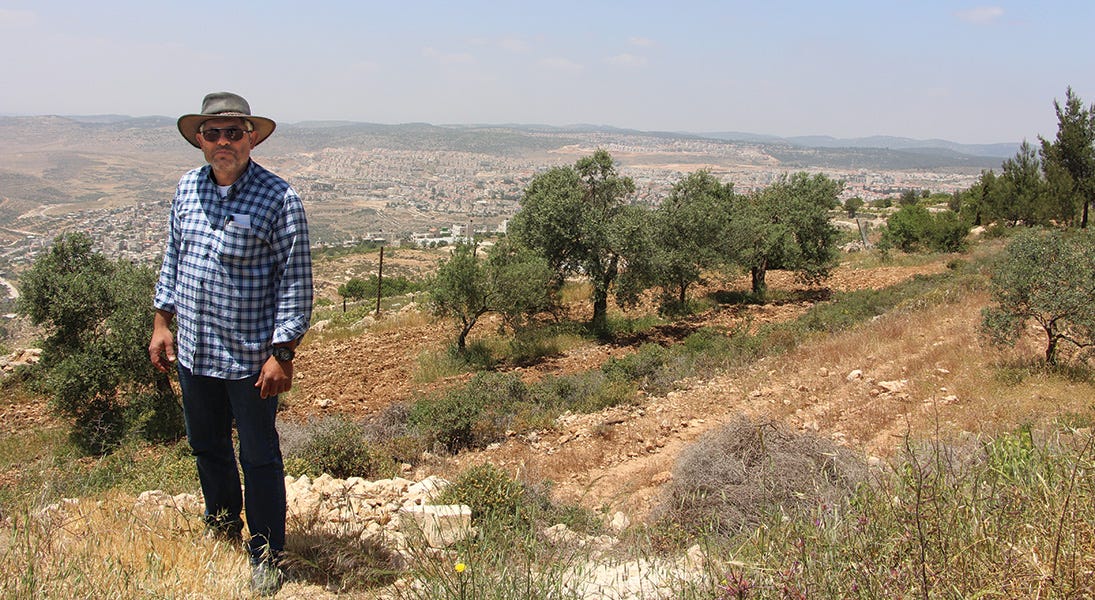
Zealous to hear “both sides,” I sought out Israel’s Ministry of Foreign Affairs, the Palestinian Authority, UNRWA, B’tselem, Al-Haq, Jordanian negotiators, and Christian organizations like the International Christian Embassy Jerusalem and Holy Land Trust. I attended lectures and book launches. I heard testimonies from Breaking the Silence, wept with storytellers from Parents Circle, and marveled at the resolve of Combatants for Peace whose members knew up close the futility of violence.
No one was off limits. I sat with gun-toting settlers and dispossessed refugees, zealous peace activists and contrarian ideologues, aging Arab Bedouins and young Haredi Jews. I taught English to students in Nablus, hiked the West Bank with Muslims, stayed in moshavim, kibbutzim and eco-farms in the Galilee, and twice visited the besieged Gaza. I observed Ecumenical Accompaniers shielding children in Hebron; I witnessed brave Rabbis for Human Rights in Bil’in. In Anata I took inspiration from Jeff Halper, in Bethlehem from Sami Awad, in Jerusalem from Salim Munayer, to name a few sages from a long list that includes both editors of this book.

With leaders like these, went my unassailable logic, the peace camp would surely succeed. Even with setbacks like September 11 and the Second Intifada, they would eventually transform the conflict from below, until two viable states emerged or until Israel became an egalitarian state for all its citizens. And American Christians would finally join the march toward peace.
Naïve, as it turns out.
Watching clouds threaten
Naïveté succumbed to dread. Checking the pulse of the Two State solution, I confirmed its demise and watched Israel maneuver to ensure that no viable Palestinian state would ever emerge. Settlers weren’t leaving. Palestinian land was shrinking. Legalized, entrenched inequality meant wildly disproportionate retaliation against Palestinian violence, detention without charge, systematic prisoner abuse, accelerated demolition of houses and villages, impunity for settler terrorists, state-funded parades in Old Jerusalem, and Knesset laws that inscribed discrimination based upon ethnicity. The Jewish state’s hegemony—political, cultural, demographic, military—looked to be fortified for the long term.
Meanwhile, many younger Palestinians were abandoning their parents’ dream of national self-determination and questing instead for human rights. Likewise, the new generation of Palestinian Christians was feeling forsaken by western Evangelicals—whose Zionist ideology had proven intractable, and whose pilgrims walked where Jesus walked but never learned how.
Raging in the falling dark
In the months since October 7, 2023, shadows have darkened my soul. Israel’s forces have abandoned restraint and turned Gaza into wasteland. In pursuit of territory, permanent security and payback, the IDF has exterminated and maimed tens of thousands, displaced and terrorized millions, seized most of the tiny Strip (60%, soon 70%), besieged the rest, and inflicted on Gazans trauma more grievous than what their grandparents suffered eight decades ago.
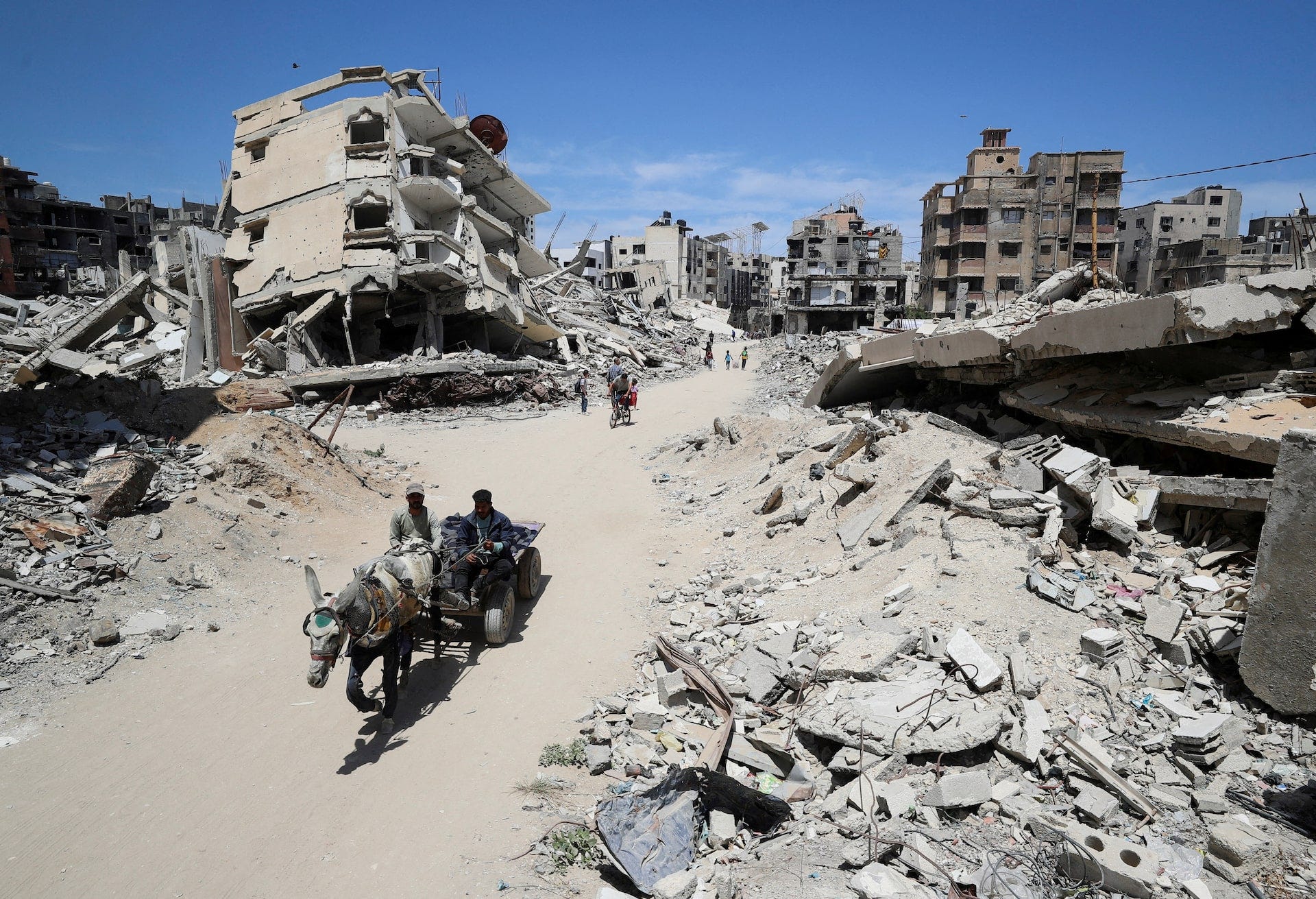
My darkness is not just outrage over Israeli brutality and American complicity, nor is it merely fears of Palestinian erasure. It is also the bleak realization that a live-streamed extinction has had almost no impact on my pale-faced, Euro-American, Evangelical tribe. After three years of state terror, Zionist Christians are sticking to their script: Israel acts in self-defense, the IDF is honorable and Hamas demonic, Itamar Ben Gvir is an outlier, Palestinians are incapable of peaceful co-existence, Israel’s critics are antisemitic, and the near-global consensus that the Gaza assault is genocidal is without merit.
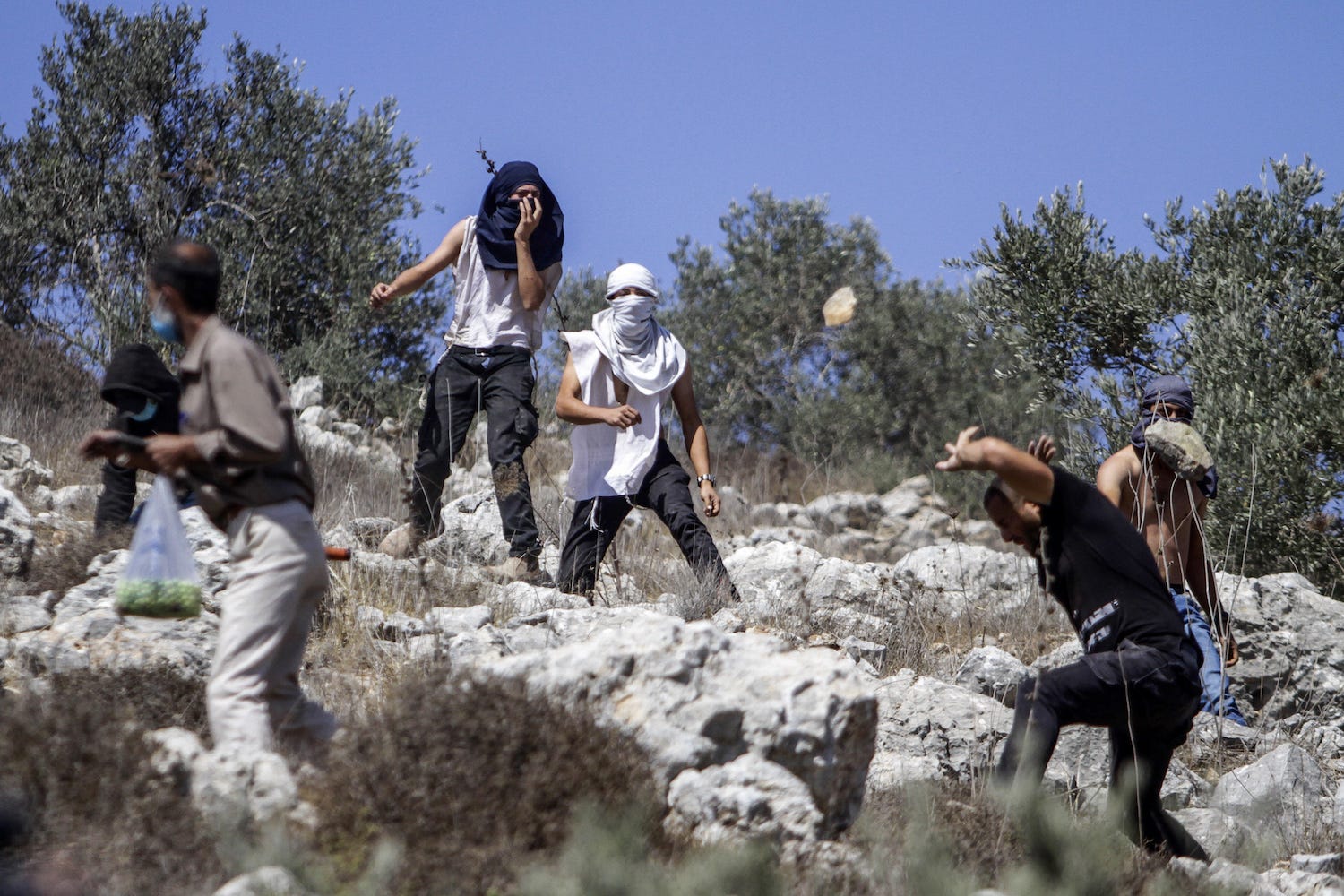
My people may lament the death of Gaza’s children and gesture obliquely at Israel’s “imperfections.” But never do they repudiate systemic injustice or condemn Israel for bombing and sniping non-combatants. After more than 5,000 attacks in the West Bank by Jewish Israeli civilians since early 2023,5 Evangelical support for the settler movement remains strong.
I once thought arguments and evidence would change minds. I once imagined Christian Zionists and Evangelical partisans repenting of uncritical support for the state of Israel. I once expected that the cries of bereaved parents and forlorn orphans would awaken in them zeal for justice. I once assumed their tolerance of Israel’s transgressions had limits.
I harbor such fantasies no longer. Indeed, after Evangelicalism’s profane complicity in Gaza’s desolation, I feel estranged from my tribe. Like an Elijah despondent over the Israelites, I hold out little hope for my people. Unlike Elijah, it is not clear I’ll be able to return to their world.
David Brady, “Interview with Garrison Keillor – February 22, 1999” (https://www.brethrenhistory.org/wp-content/uploads/2023/11/Brady.GarrisonKeilor.pdf).
Robert O. Smith, More Desired than Our Owne Salvation: The Roots of Christian Zionism (Oxford, 2013), 2, 96, 185–87.
Scriptures are cited from the NRSV.
Richard Hays, Echoes of Scripture in the Letters of Paul (Yale, 1989), 34, 86, 44 (cf. 87, 96-99, 102-104, 109, 115).
Amira Hass, “The Numbers Behind the ‘Sacred Work’ of Cleansing West Bank Palestinians for Future Jewish Villas” Haaretz May 20, 2026.
The evangelical "tribe" (or loose association of tribes bound together by cultural Christianity and feelings) has a lot to answer for in the 21st century, and we are only just past the quarter mark. I find myself increasingly alienated by a church that seems willing to overlook real injustices to prevent perceived injustices. How evangelicals have handled Israel and Palestine, immigrants, LGBTQ people, and the growth of Billionaire power, strikes me as the anti-Christ they all point to elsewhere. This pro-apocalypse death cult, sparked by misunderstood eschatology, needs to reform or die.
I feel your pain, as it reflects my feelings exactly. I’ll never understand the silence of the Western church in terms of what’s happening today. My faith in God and the teachings of Jesus is strong, but I’m finding it hard to sit inside a silent church.